
Choosing between materials is one of the first decisions homeowners face when shopping for a new door, and it often comes down to aluminum vs. steel garage doors. Both materials have loyal fans for good reason, but they perform differently when it comes to durability, cost, maintenance, and style. Here’s how they actually compare so you can choose with confidence, along with a closer look at where each material genuinely shines.
Key Takeaways
- Steel Wins on Durability: Steel resists dents and impacts better, making it the stronger choice for high-traffic garages.
- Aluminum Resists Rust Naturally: Aluminum won’t corrode the way steel can if the protective coating is ever compromised.
- Weight Affects the Whole System: Aluminum’s lighter weight can mean less strain on springs and openers over time.
Aluminum vs. Steel Garage Doors: The Basics
Steel doors are typically built from galvanized steel panels, often layered with insulation, and finished with a baked-on paint coating. Aluminum doors use a naturally lightweight, corrosion-resistant metal that’s frequently chosen for large, full-view glass-panel doors. Both materials show up across the range of garage door options available, so the right choice really depends on your priorities, from how the door will be used day to day to the look you’re trying to achieve on your home’s exterior.
Steel’s strength comes from the metal itself, which is naturally stiffer and more resistant to bending than aluminum of a similar thickness. That’s why steel remains the default choice for standard residential doors, where dent resistance and overall structural rigidity tend to matter more than shaving off weight. Aluminum earns its place in a different way, through corrosion resistance and a strength-to-weight ratio that makes it practical for larger door sections, such as full-view glass designs, where a heavier steel frame would put more strain on the opener and spring system.
How They Compare
| Factor | Steel | Aluminum |
| Durability | Highly resistant to dents and impacts. | More prone to denting under impact. |
| Rust Resistance | Can rust if the coating is scratched or worn. | Naturally corrosion-resistant. |
| Weight | Heavier, puts more load on springs and opener. | Lightweight, reduces strain on the system. |
| Cost | Generally more affordable upfront. | Often costs more, especially for glass-panel styles. |
| Maintenance | Occasional touch-ups if the coating is damaged. | Low maintenance, minimal rust concerns. |
| Best For | High-traffic garages and busy households. | Coastal climates and modern glass-panel designs. |
When Steel Makes More Sense
If your garage door takes regular wear and tear, from sports equipment, bikes, or an active household, steel’s dent resistance makes it the more practical choice. It’s also typically the more budget-friendly option for homeowners prioritizing durability and value. Families with kids who play basketball in the driveway, or households that store equipment on wall-mounted racks near the door, tend to appreciate how forgiving steel is against the occasional accidental bump.
When Aluminum Makes More Sense
Aluminum shines in coastal areas or climates with high humidity, where rust resistance matters most. It’s also the material of choice for large glass-panel doors, since its lighter weight makes bigger, full-view designs more practical for the opener and spring system to handle. Homeowners renovating a modern-style home, or anyone prioritizing natural light and an architectural look over maximum impact resistance, also tend to gravitate toward aluminum.
What About Cost Over the Life of the Door?
Upfront price only tells part of the story. A steel door’s baked-on finish can chip or scratch over time, and once the protective coating is compromised, rust can develop underneath, sometimes requiring touch-up painting or, in more serious cases, panel replacement. Aluminum avoids that particular failure point entirely, since the metal itself doesn’t rust, though a dent in an aluminum panel is often more difficult to repair cleanly than a similar dent in steel. Factoring in how the door will actually be used, rather than just the sticker price, tends to give a clearer picture of long-term cost.
Does Material Affect Installation or Long-Term Service?
Both materials can be installed and serviced using standard hardware and openers, though the weight difference is worth factoring in if you’re also upgrading your springs or opener at the same time. A technician can confirm your current system is properly matched to whichever material you choose, particularly if you’re switching from one material to the other rather than simply replacing a door with a like-for-like model.
How Climate Should Influence Your Decision
Local weather conditions play a bigger role in this decision than many homeowners initially expect. In regions with high humidity, coastal salt air, or frequent freeze-thaw cycles, moisture has more opportunity to work its way into any nicks or scratches in a steel door’s finish, gradually leading to rust if it goes unnoticed. Aluminum sidesteps that particular risk entirely, which is part of why it’s so often recommended for waterfront properties. In drier, more inland climates with less humidity and fewer coastal elements to worry about, that advantage matters less, and steel’s durability against everyday bumps and impacts often becomes the more relevant factor.
Style and Finish Options for Each Material
Both materials offer a wide range of finishes, though they lean toward slightly different aesthetics. Steel is highly versatile, taking paint finishes, wood-look laminates, and embossed panel textures well, which is why it dominates traditional raised-panel and carriage-style doors. Aluminum is more closely associated with sleek, contemporary looks, particularly full-view or partial-glass designs framed in a slim metal border, since its lighter weight and clean lines suit that architectural style especially well. If you already have a clear design direction in mind, whether that’s a classic panelled look or a modern glass-and-metal facade, that preference alone can often point you toward the more practical material choice.
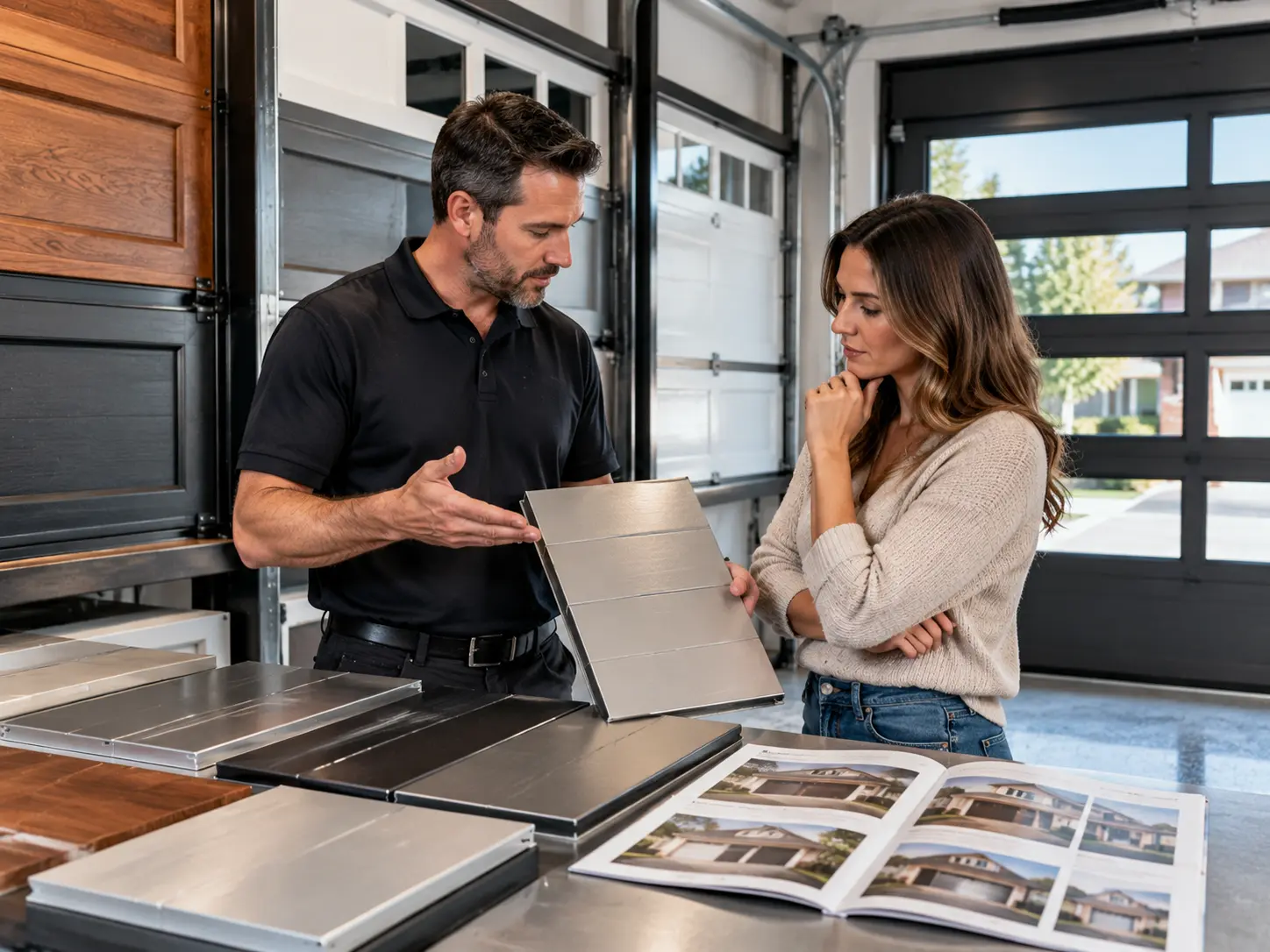
Not sure which fits your home best? The team at Titan Garage Doors can walk you through both options in person and help you weigh durability against style and budget.
Frequently Asked Questions
Which lasts longer, aluminum or steel garage doors?
With proper maintenance, both can last many years. Steel tends to hold up better against dents and daily impacts, while aluminum holds up better against rust and corrosion over time.
Is aluminum more expensive than steel?
Generally, yes, particularly for glass-panel or custom designs. Standard steel doors are usually the more budget-friendly starting point.
Can aluminum garage doors be insulated?
Yes, aluminum doors are available in insulated versions, though steel doors are more commonly chosen when insulation and maximum durability are the top priorities.
Do aluminum doors dent easily?
Aluminum is softer than steel, so it can dent more easily from significant impacts, though it won’t rust the way a scratched steel panel might over time.
Which material is better for coastal homes?
Aluminum is generally the better choice near the coast, since its natural corrosion resistance holds up well against salt air and humidity that can wear down steel coatings faster.
Call Titan Garage Doors Today
Still deciding between aluminum and steel? Contact us today and we’ll help you choose the right material for your home and budget.