
A failing travel module usually shows up as a door that stops in the wrong place. The door may stop short of fully open or closed, start to close and reverse for no visible reason, or lose its travel settings every time you reset them. Because the same symptoms can come from sensors, binding hardware or a broken spring, this guide shows how to narrow the cause before you spend money on a part.
Quick Answer
Signs of a failing travel module include a door that will not open or close fully, stops at inconsistent points, reverses without an obstruction, or will not hold its travel limits after reprogramming. Rule out dirty or misaligned photo eyes, binding in the door and broken springs first. If those check out and the limits still will not hold, a technician can test the module and the wiring to the logic board before replacing anything.
Key Takeaways
- The travel module tells the opener where the door is and where to stop, so a fault shows up as wrong stopping points.
- Photo eyes, binding hardware and broken springs cause similar symptoms and should be ruled out first.
- Limits that will not save, or keep drifting, are the strongest hint that the module itself is failing.
- Replacing the module means opening the motor head, so it is a job for a technician.
What the Travel Module Does
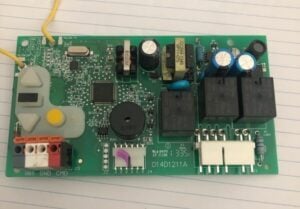
The travel module, sometimes called the limit or travel assembly, is how the opener knows how far to move the door. It senses the position of the drive and tells the logic board when the door has reached fully open or fully closed. It also helps the opener decide when to stop and reverse if the door meets resistance on the way down.
Where it lives depends on the opener’s age. As Titan’s garage door opener parts guide explains, newer openers use a digital electronic board inside the motor head, older ones use a mechanical arrangement, and the oldest units had limit switches mounted on the rail. Brand names and part layouts vary, and not every opener has a separately replaceable module, so your model matters.
Signs the Travel Module May Be Failing
Symptoms alone cannot prove a module has failed, but a pattern of them is a strong clue. This table matches common signs with what they may mean.
| What You Notice | What It May Mean | Next Step |
|---|---|---|
| Door stops short of fully closed or fully open | Travel limits out of adjustment, or module not tracking position | Reprogram limits as described in the manual |
| Door starts to close, then reverses with nothing in the way | Sensor, binding or travel issue | Check photo eyes first, then limits |
| Limits will not save or drift after being set | Module or its connection to the logic board | Have a technician test the module and wiring |
| Door travels erratically or stops at random points | Worn or failing module, or a mechanical problem | Stop using the opener and arrange an inspection |
Check These Before Blaming the Module
Many travel complaints turn out to be something simpler. Work through these safe checks, which do not involve any high-tension parts.
- Look at the photo eyes. Both sensor lights should glow steadily. A blinking light means the sensor is misaligned or obstructed. Our guide to a blinking left sensor light walks through it.
- Look for obstructions. Check the tracks, the floor under the door, and the bottom seal for anything that could add resistance.
- Look at the springs. A visible gap in a torsion spring means it has broken. Do not run the opener, and read our article on what to do when a garage door spring is broken.
- Test it by hand. With the door fully closed, pull the red release cord. A door that moves smoothly and stays roughly in place when raised partway suggests the problem is electronic. If it feels heavy, jammed, or uneven, stop and call for service.
If your door opens only a short distance before stopping, our article on why a garage door opens a few inches and then stops covers related causes, and garage doors that will not stay closed covers the closing side.
Not Sure What Is Causing the Problem?
Travel faults, sensor problems, and spring trouble can look almost identical from the driveway. A technician can test the door’s balance, the sensors, the limits and the module in one visit, so you replace only what has actually failed. Titan Garage Doors repairs and replaces major opener brands, including LiftMaster and Chamberlain, and offers free estimates.
When It Is Not the Travel Module
It helps to know which symptoms point away from the module. This table lists a few that people often mistake for travel trouble.
| Symptom | Look at This First |
|---|---|
| Motor runs but the door does not move | Door disconnected from the trolley, broken spring or stripped gear |
| Door will not close and sensor lights blink | Photo-eye alignment or wiring |
| Opener has power but does nothing | Logic board or wall control wiring |
| Remote works inconsistently | Remote battery, receiver or programming |
If the opener is completely unresponsive, the problem is more likely the logic board, which we cover separately in our guide to LiftMaster openers that will not reset.
Repair the Module or Replace the Opener?
A travel module is a small part inside a much larger machine, so the decision depends on the machine’s age and overall condition. Titan’s article on how to tell if your garage door opener is failing notes that most residential openers last roughly 10 to 15 years.
| Situation | Module Replacement May Be Enough | Opener Replacement May Be Worth Considering |
|---|---|---|
| Younger opener, otherwise smooth and quiet | Often | Usually not |
| Older opener with several worn parts | Sometimes | Often worth pricing |
| Opener lacks rolling code or battery backup | Does not add those features | May make sense |
| Part no longer available for the model | Not an option | Likely |
Cost depends on the opener model, whether the part is available, how much labour is involved and whether other components are worn. After a module replacement, the limits and force settings must be set again and the safety reversal tested, so factor that into any estimate. For a wider look at replacement options, see our garage door opener installation, repair and replacement page.
Why This Job Belongs With a Technician
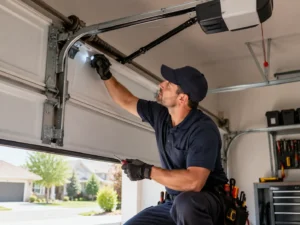
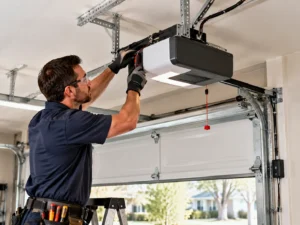
Reaching the module means removing the opener cover and working near line-voltage components, and a mistake can affect the safety reversal system. After fitting the part, a technician sets the limits, adjusts the force, and confirms the door reverses on contact. Homeowners can safely clean photo eyes, replace remote batteries, and check for obstructions, but leave the internals to a professional.
Get the Door Stopping Where It Should
If your door will not hold its limits, Titan Garage Doors can diagnose the cause and repair or replace the opener, with same-day and 24/7 emergency service available across Metro Vancouver and the Fraser Valley. We offer free estimates, and we will tell you plainly whether a module, a board, or a new opener makes the most sense.
Frequently Asked Questions
What does a travel module do on a garage door opener?
It tracks the position of the drive so the opener knows where fully open and fully closed are, and when to stop or reverse. When it fails, the door may stop in the wrong place, reverse unexpectedly or lose its settings. The exact part and its name vary by brand and model.
Can I reset the travel limits myself?
Usually yes, using the steps in your opener’s manual, and it is a sensible first step if the door stops short. If the limits will not save, or drift back to the wrong position, the cause may be more than a setting, and a technician should check it.
Why does my door reverse a short distance after it starts to close?
Most often the opener is reading an obstruction. That can be a misaligned or dirty photo eye, binding hardware, a worn seal or a travel setting that needs adjustment. Check the sensors and the path of the door before assuming the module has failed.
Is it safe to keep using the opener if the travel module is failing?
It is best not to. A door that stops unpredictably or fails to reverse reliably is a safety risk. Use the manual release cord with the door fully closed, avoid forcing it, and arrange an inspection rather than repeatedly resetting the opener.
Does replacing the travel module fix an old opener?
It fixes the travel fault, but not the age of the rest of the opener. If gears, the logic board or the motor are also worn, you may spend more on repeated repairs than a new opener would cost, so ask for a price comparison first.