
Weatherstripping is a flexible seal that closes the gaps between a garage door and its surroundings. It keeps out rain, drafts, leaves, and pests, and it quietly affects how the door travels and seals against the floor. This guide explains what each seal type does, how to tell when yours has worn out, and why a new seal can change how your opener behaves.
Quick Answer
Garage door weatherstripping seals the gaps around and under a closed door. The bottom seal blocks water, debris, and pests at the floor; side and top seals close the gap against the frame; and seals between panels limit air and moisture at the joints. It does not add insulation, but it reduces drafts and water entry. Replace it when it is cracked, flattened, or letting in daylight, and have the door’s safety reversal tested afterward.
Key Takeaways
- A garage door has several seals, and each one has a different job.
- Weatherstripping reduces drafts and water entry but does not replace insulation.
- Daylight around the closed door, puddles at the base and gnawed rubber are the clearest signs of failure.
- A seal that is too stiff or too tall can make the door drag or reverse, so installation quality matters.
Four Seals, Four Different Jobs
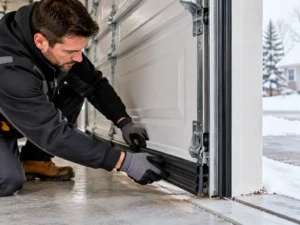
When people say weatherstripping, they usually mean the rubber strip along the bottom of the door. In practice, a well-sealed door has up to four kinds of seals working together.
| Seal | Where It Sits | Main Job |
|---|---|---|
| Bottom seal (astragal) | Along the bottom edge of the door | Blocks water, debris, pests and drafts at the floor |
| Side and top weatherstripping | Around the door opening, against the frame | Closes the gap between the closed door and the jambs |
| Section (inter-panel) seals | Between the door’s panels | Limits air and moisture at the panel joints |
| Threshold seal | On the floor at the base of the opening | Helps seal uneven or sloped concrete |
Bottom seals come in several profiles, including bulb or U-shaped designs and T-end vinyl that slide into a retainer on the bottom panel. The right profile depends on the door, the retainer and how level the floor is. A seal that works on a flat slab can leave gaps on concrete that has settled.
What Good Seals Do in a Wet, Mild Climate
In Metro Vancouver and the Fraser Valley, the biggest enemy is wind-driven rain, followed closely by damp leaves and the small animals that follow the warmth in fall. A healthy seal handles all three. Here is what it protects against.
- Water: A sound bottom seal stops rain and meltwater from running under the door into the garage.
- Drafts and dust: Closing the perimeter gaps cuts air leakage, which matters most when the garage is attached to living space.
- Pests: Mice can squeeze through very small gaps. A cracked or flattened seal gives them an easy entry point.
- Debris: Leaves and grit blow in under a worn seal and collect along the floor and tracks.
- Noise: A snug perimeter dampens some street and wind noise.
Natural Resources Canada’s home energy guidance distinguishes between caulking, which seals joints that do not move, and weatherstripping, which seals joints that do, such as doors. It also notes that sealing reduces air leakage but doesn’t add thermal resistance. For real insulation value, look at the door itself. Our guides on insulation R-value for Greater Vancouver and on garage door insulation and your energy audit cover that side. For the underlying principle, see Natural Resources Canada’s section on insulation, house wrap and weatherstripping materials.
How to Tell Your Seals Are Worn Out
You do not need tools for a basic check. Close the door, turn off the garage lights during the day, and look along the bottom, sides and top. This table shows what you might find.
| What You Notice | What It May Mean | Next Step |
|---|---|---|
| Daylight showing around the closed door | Perimeter seal worn, shifted or missing | Inspect the sides and top, then plan a replacement |
| Bottom rubber is flat, cracked or brittle | Seal has lost its elasticity | Replace the bottom seal |
| Puddles at the base after heavy rain | Gap under the door or a floor that slopes toward it | Check the seal profile and the threshold |
| Chewed or torn rubber | Pests have been through | Replace the seal and look for other entry points |
| Seal rolled or pinched in the track | Seal is misfitted or door is out of alignment | Have the door and tracks inspected |
Is Your Door Seal Due for a Check?
Seals fail gradually, so it is easy to miss when they stop doing their job. Titan Garage Doors replaces worn weatherstripping and bottom seals across Metro Vancouver and offers free estimates. Read about the weatherstripping and bottom seal replacement service, or ask for a quote directly.
When a Seal Changes How the Door Runs
A seal that presses too hard can make a door behave as if something is in its way. Openers sense resistance as the door closes. If a new bottom seal is too tall, too stiff, or compressed against an uneven floor, the extra resistance can make the door stop short or reverse. This is easy to mistake for an opener fault.
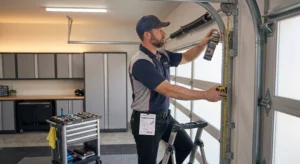
That is why a proper installation includes testing the door’s safety reversal and checking its travel after the seal is fitted. Titan’s technicians run those checks whenever they change or add perimeter material. If your door starts reversing after a new seal went on, compare the symptoms with our guides to a garage door that will not close all the way and to garage door opener safety sensors.
What Replacement Involves, and Where DIY Stops
Swapping a slide-in bottom seal or fresh side stops is generally approachable for a careful homeowner. You remove the old strip, clean the retainer, and fit the new one to the same profile. The work stays safe as long as you avoid the high-tension parts.
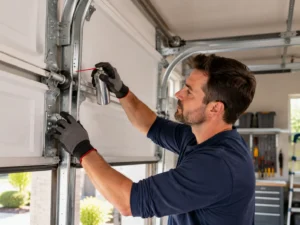
Do not loosen the brackets at the bottom corners of the door. On many sectional doors, those brackets connect to the lifting cables, which carry heavy spring tension. If the bottom retainer is rusted through, the door is crooked, or a cable looks frayed, stop and call a professional. Our article on warning signs a garage door cable is about to snap explains what to look for, and our track alignment and off-track repair service covers doors that aren’t sitting true.
Seal Checks Worth Doing Before the Wet Season
Fall is the best time to inspect weatherstripping, before the heaviest rain and the first cold snaps. A quick walk around the door pairs well with the rest of a seasonal routine. The fall and winter maintenance checklist, the guide on how to prepare your garage door for winter storms and the tips for avoiding a frozen garage door all build on a healthy perimeter seal.
Keep the Weather on the Outside
Titan Garage Doors replaces weatherstripping and bottom seals for homes and commercial properties in Metro Vancouver and the Fraser Valley, with free estimates. If your door lets in drafts, water or daylight, we can match the right seal to your door and test it before we leave. Find your city on our service areas page.
Frequently Asked Questions
How often should garage door weatherstripping be replaced?
There is no fixed schedule because material, sun exposure and use all matter. Inspect your seals at least once a year and replace them when they are cracked, flattened, brittle or letting in daylight. A seal that still springs back when pressed is usually still working.
Does weatherstripping make a garage warmer?
It reduces drafts, so the garage often feels less cold, especially if it is attached to the house. It does not add insulation, so a non-insulated door will still lose heat through the panels. Think of weatherstripping as stopping air leaks and insulation as slowing heat transfer.
Will a new bottom seal keep mice out?
A good seal closes the gaps mice like to use under the door, but it cannot guarantee a pest-free garage. Mice also enter through other gaps, so check wall penetrations and door corners, and keep food and bird seed in sealed containers.
Can new weatherstripping make my door reverse?
Yes. If the seal is too tall, too stiff or compressed unevenly, the opener may read the extra resistance as an obstruction and reverse. A correctly sized seal and a post-installation safety reversal test prevent this. If it happens, do not disable the safety feature; have the door checked.
Do I need to replace all the seals at once?
Not always. The bottom seal wears fastest, so you often replace it alone. Side and top weatherstripping lasts longer, but if one section is failing, the others usually follow soon after. A technician can check them all in one visit and replace only what needs it.