A squeaky, grinding garage door is one of the most common complaints homeowners bring to us, and it almost always comes down to dry rollers. Learning how to lubricate your garage door rollers properly is one of the simplest maintenance tasks you can do yourself, and it makes a noticeable difference in how smoothly and quietly your door operates. Done right, it takes about fifteen minutes and can add years to the life of your rollers, hinges, and springs. Below, we walk through exactly what to use, what to avoid, and the full step-by-step process.
Key Takeaways
- Use the Right Product: Silicone- or lithium-based garage door lubricant works far better than household oils like WD-40, which attract dust.
- Twice a Year Is Enough: Most doors only need lubrication every six months, or sooner if you notice new noise.
- Less Is More: A light coating on moving metal parts is all that’s needed; excess lubricant just attracts grime.
Why Roller Lubrication Matters
Your garage door rollers travel up and down the track every single time the door opens or closes, often hundreds of times a month. Without lubrication, metal rollers and hinges grind against each other, wearing down faster and creating the screeching noise many homeowners assume means a bigger problem. Regular lubrication reduces friction, protects against rust, and keeps the whole system running the way it was designed to.
Beyond noise, dry components also put extra strain on your opener motor, since it has to work harder to overcome the added resistance. Over months and years, that extra load can shorten the life of the motor, gears, and drive belt or chain. A properly lubricated door is not just quieter; it is genuinely easier on every other part of the system.
If your door is still noisy after proper lubrication, it may be a sign of a deeper mechanical issue. The team at Titan Garage Doors can take a closer look and rule out worn rollers or misaligned tracks.
What You’ll Need
- Silicone-based garage door lubricant: Look for a product made specifically for garage doors rather than a general-purpose spray.
- A soft, clean cloth: For wiping away old grime and excess product.
- A step stool or ladder: To safely reach the upper track and torsion spring area.
- Safety glasses: Worth wearing when working near or under the door and spring system.
How to Lubricate Your Garage Door Rollers Step by Step
1. Open the Door and Disconnect the Opener
Raise the door fully and, if possible, pull the manual release cord so the opener is disconnected. This lets you move the door by hand and keeps it from cycling automatically while you work.
2. Wipe Down Each Roller
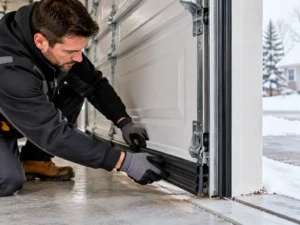
Use a clean cloth to remove built-up dust and old, hardened grease from each roller and its stem. Starting clean helps the new lubricant absorb properly instead of sitting on top of grime. This is also a good moment to visually check each roller for cracks, flat spots, or excessive play in the stem.
3. Apply Lubricant to the Roller Bearings
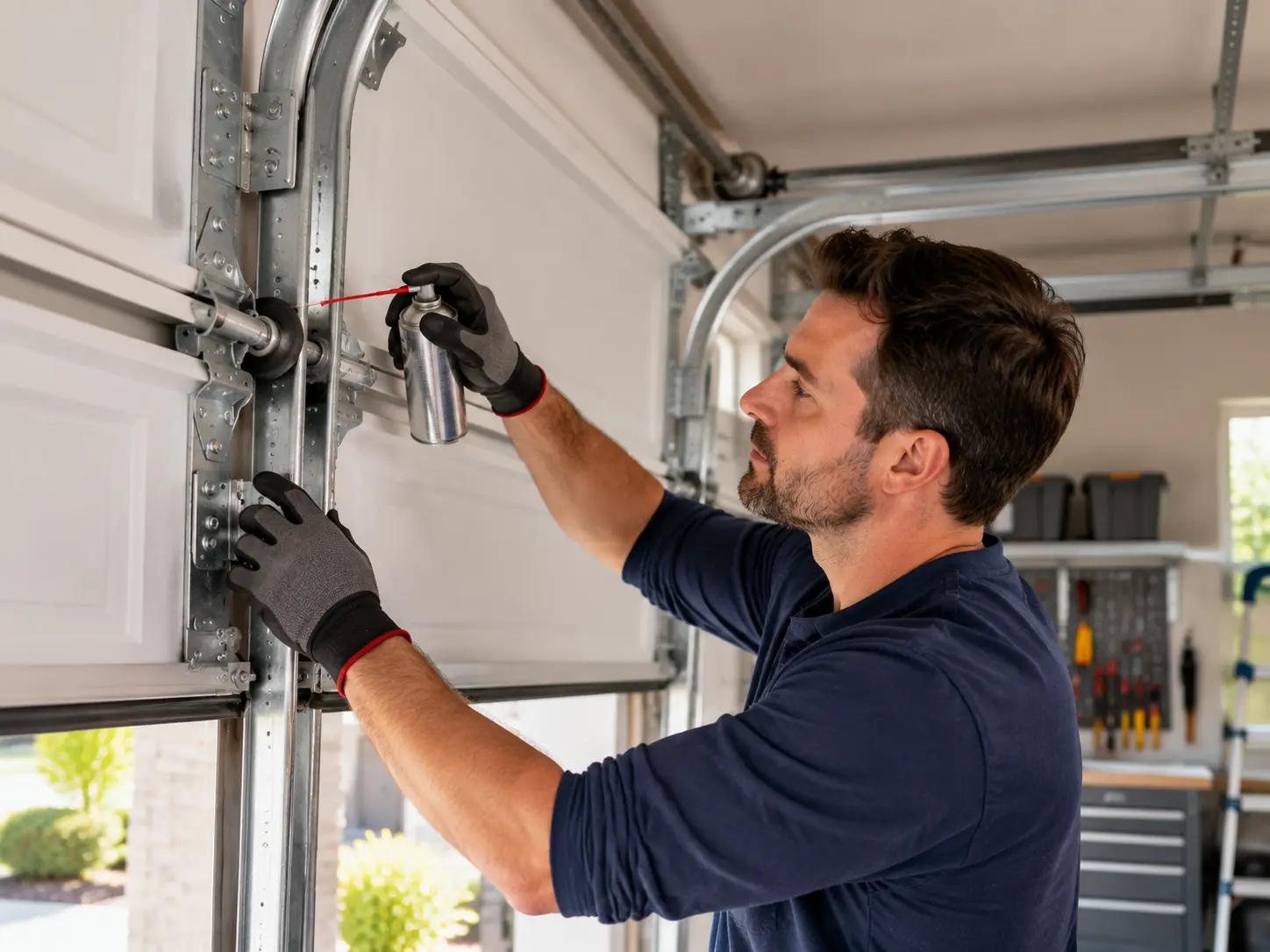
Spray a light coat directly onto the bearings at the centre of each roller, not the wheel itself. Move the door up and down a few times by hand to work the lubricant into the moving parts. Repeat for every roller on both sides of the door, working from the bottom panel up to the top.
4. Lubricate the Hinges and Springs
While you have the lubricant out, apply a light coat to each hinge pivot point and along the length of the torsion springs. This keeps the whole system moving in sync and reduces overall noise. Pay particular attention to the hinges at the centre of the door, since they flex the most with every cycle.
5. Lubricate the Opener Chain or Screw Drive
If your opener uses a chain or screw drive rather than a belt, a light application of lubricant along its length reduces friction and noise at the source. Check your opener’s manual first, since some belt-drive models are designed to run without lubrication.
6. Wipe Away Excess Product
Go back over every part you treated with a dry cloth to remove drips. Excess lubricant on the track or floor only attracts more dust and debris, and it can create a slip hazard on the garage floor if it drips down.
What to Avoid When Lubricating Your Rollers
- WD-40 or Household Oils: These are degreasers, not lubricants, and tend to wash away grease that should stay in place while attracting dirt.
- Grease on the Track Itself: Lubricant belongs on the rollers and hinges, not smeared along the track, where it collects debris.
- Over-Lubricating: A heavy application does not work better; it just drips and makes a mess over time.
- Skipping the Cleaning Step: Spraying lubricant over old grime traps grit against the bearing instead of protecting it.
If your rollers are cracked, chipped, or flat-spotted rather than just dry, lubrication will not fix the noise. In that case, request a service visit from Titan Garage Doors to have the rollers replaced.
Steel vs. Nylon Rollers: Does Lubrication Differ?
Not all rollers are built the same, and the type installed on your door affects how much attention they need. Steel rollers have exposed bearings that come into direct contact with the track, which means they rely on regular lubrication to stay quiet and move smoothly. Nylon rollers, by comparison, use sealed ball bearings and a softer wheel material that naturally runs quieter and generates less friction against the track, so they need lubrication less often. Many homeowners upgrading from steel to nylon rollers notice an immediate drop in noise, even before applying any lubricant.
Regardless of which type your door uses, the bearing at the centre of the roller is always the part that benefits most from lubrication. Focus your effort there rather than spraying the outer wheel surface itself.
Signs Your Rollers Need More Than Lubrication
Lubrication solves noise caused by friction, but it will not fix a roller that is physically damaged. Watch for a few specific signs that point to replacement rather than routine maintenance.
- Visible Cracking: Nylon rollers can develop hairline cracks around the wheel after years of use, especially in colder climates.
- Flat Spots: A roller that has sat in one position for a long time can develop a flattened edge that causes a rhythmic thumping sound as the door moves.
- Rust or Pitting: Steel rollers exposed to moisture can rust at the bearing, which lubrication will mask temporarily but not actually resolve.
Catching these issues early during a routine lubrication session is one of the simplest ways to avoid a more disruptive breakdown later on.
Frequently Asked Questions
How often should I lubricate my garage door rollers?
Twice a year is enough for most residential doors. If you use your garage frequently or live somewhere with harsh winters, a quick lubrication every three to four months keeps things running smoothly.
Can I use motor oil to lubricate my garage door rollers?
It is best to avoid it. Motor oil is thinner than purpose-made garage door lubricant and tends to attract dust and grime much faster, which can lead to more buildup over time.
Why are my rollers still noisy after lubrication?
If noise continues after lubrication, the rollers themselves may be worn, cracked, or misaligned in the track. This usually means it is time for a professional inspection rather than another round of lubricant.
Should I lubricate plastic or nylon rollers the same way?
Nylon rollers have sealed bearings that need less frequent lubrication than steel rollers, but the bearing area can still benefit from an occasional light application.
How do I know if it is time to replace my rollers instead of lubricating them?
If you notice visible cracks, flat spots, rust, or wobbling as the door moves, lubrication will not resolve the issue. Replacement is the safer long-term fix at that point.
Call Titan Garage Doors Today
Keep your garage door quiet, smooth, and reliable year-round. Contact us for a full maintenance tune-up or roller replacement whenever your door needs more than a quick lubrication.