
How do I choose the right new garage door for my home?
Choosing a new garage door comes down to four key factors: material (steel, aluminum, wood or composite), insulation R-value for Metro Vancouver's climate, a style that suits your home, and your budget. For most BC homes, an insulated steel door offers the best balance of durability, energy efficiency and value. Titan Garage Doors helps Vancouver-area homeowners compare these options and installs the right door for their needs. Call (604) 313-0108 for a free consultation.
Selecting a new garage door is one of the most impactful home improvement projects a property owner can undertake. A modern garage door enhances curb appeal, improves household energy efficiency, and protects against extreme weather. Navigating options like steel, wood, composite, insulation types, and smart opener integration can feel overwhelming. This guide breaks down every essential purchasing decision so you can choose a system tailored to your budget and aesthetic goals.
Key Takeaways
- Curb Appeal & Value: A garage door replacement consistently yields one of the highest returns on investment (ROI) among home renovation projects.
- Insulation Performance: Choosing polyurethane insulation over polystyrene provides superior thermal performance (higher R-value) and increases the door’s structural rigidity.
- Safety Standard Compliance: Modern doors must feature compliant safety mechanisms, as outlined by safety organizations like the Canadian Centre for Occupational Health and Safety (CCOHS) and international standards like UL 325.
Assessing Your Structural and Architectural Needs
Before selecting colors or decorative window inserts, you must understand your building’s structural footprint. Standard single-car residential doors in Canada typically span 8 to 9 feet wide by 7 feet high, while double-car garages usually measure 16 feet wide.
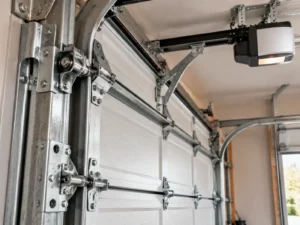
Accurate measurements of headroom, sideroom, and backroom clearance determine whether standard torsion spring assemblies or low-headroom track kits are necessary. To evaluate these dimensions accurately, schedule a professional site consultation with Titan Garage Doors.
Comparing Popular Garage Door Materials
1. Steel Garage Doors
Steel remains the most popular material due to its versatility, exceptional durability, and low maintenance requirements. Steel doors come in single, double, or triple-layer construction formats.
- Pros: Highly resistant to warping, available in painted or wood-grain finishes, and cost-effective.
- Cons: Can dent under direct impact from heavy objects.
2. Wood and Wood-Composite Doors
Real wood provides unmatched natural warmth and classic elegance. Composite wood offers a similar look using recycled wood fibers mixed with resin binding agents.
- Pros: Exceptional natural aesthetics and custom styling flexibility.
- Cons: Real wood requires routine painting or staining every few years to prevent rot caused by moisture.
3. Aluminum and Glass Doors
Aluminum frame doors fitted with full-view glass panels suit modern, contemporary architectural designs. They are light on drive gears and resist corrosion exceptionally well.
- Pros: Sleek contemporary look, rust-resistant, and lets natural sunlight into the garage workspace.
- Cons: Provides lower thermal resistance (R-value) unless equipped with insulated glass panes.
4. Vinyl and Fiberglass Doors
Fiberglass and engineered vinyl doors are durable choices designed specifically for severe coastal or high-humidity environments.
- Pros: Dent-resistant, rust-proof, and virtually maintenance-free.
- Cons: Can yellow under prolonged UV exposure if unpainted, and cold climates can cause lower-grade vinyl to crack.
Understanding Garage Door Insulation and R-Values
Insulation is vital for attached garages or garages used as year-round workshops. A door’s thermal resistance is rated using an R-value system; higher numbers represent superior thermal performance. Homeowners evaluating environmental energy standards can review home efficiency guidelines published by Energy Star.
| Insulation Type | Typical R-Value Range | Construction & Benefits |
| Non-Insulated (Single-Layer) | R-0 to R-2 | Single steel sheet. Best for unheated, detached storage units. |
| Polystyrene (Double-Layer) | R-6 to R-10 | Rigid foam panels bonded inside. Good basic thermal protection. |
| Polyurethane (Triple-Layer) | R-12 to R-20+ | Injected high-density foam core. Premium insulation, quiet operation, and maximum structural strength. |
Selecting Garage Door Styles and Aesthetics
Carriage House Doors
Replicating the look of traditional horse barn doors, carriage house doors feature decorative handles, faux hinges, and rustic paneling. They look great on craftsman, cottage, or traditional home styles.
Modern Flush and Ribbed Panels
Featuring clean horizontal lines or flat flush panels, modern garage doors emphasize minimalist design. Tinted glass side windows add a contemporary architectural touch.
Raised Panel Doors
The classic residential choice, raised panel doors feature uniform rectangular panels stamped into the door material. They blend seamlessly with traditional suburban architecture.
Safety Features and Automatic Opener Compatibility
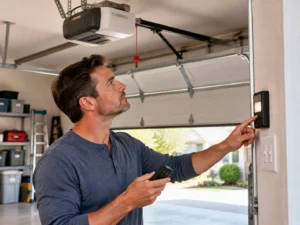
A new door installation is incomplete without evaluating your opener system. Federal and provincial guidelines monitored by the U.S. Consumer Product Safety Commission (CPSC) require all installed openers to feature functioning auto-reversing sensors and physical force-detection mechanisms.
When buying a new door, upgrade your opener to include:
- DC Motors: Operates smoothly and quietly compared to older AC chain drives.
- Battery Backup Systems: Keeps the door functional during unexpected power outages.
- Smart Wi-Fi Connectivity: Provides real-time smartphone alerts and remote opening through secure mobile apps.
Frequently Asked Questions
How long does a new garage door typically last?
With proper seasonal maintenance, high-quality steel or wood-composite garage doors last between 15 to 30 years. Torsion springs usually require replacement every 7 to 10 years depending on daily cycle frequency.
What R-value is recommended for a garage door?
For attached garages or living spaces above the garage, select a triple-layer door with a polyurethane core offering an R-12 to R-18 rating. Unheated detached garages generally only require an R-6 rated door.
Should I replace my opener when buying a new door?
While not strictly required, replacing an older opener along with your door ensures system compatibility, optimal counterbalancing, quiet operation, and updated safety features.
How much value does a new garage door add to my home?
Industry cost-vs-value reports consistently rank garage door replacement near the top for home improvement ROI, returning up to 90% to 100% of its installation cost in resale value.
Can I install a new garage door myself?
DIY installation is strongly discouraged. Garage doors weigh hundreds of pounds, and winding heavy torsion springs carries severe risk of personal injury. Professional installation ensures proper track leveling, precise spring tensioning, and full warranty protection.
Call Titan Garage Doors Today
Ready to elevate your home’s curb appeal, safety, and energy efficiency with a new garage door? Contact Titan Garage Doors today to speak with our design experts and book a professional measurement and installation service!