Winter storms put more stress on a garage door than almost any other season, between freezing temperatures, high winds, and heavy snow loads pressing against the panels. Taking time to prepare your garage door for winter storms now can prevent a frozen, jammed, or damaged door right when you need it to work most reliably. This checklist covers everything from weatherstripping to backup power so you can head into the season with confidence.

Key Takeaways
- Weatherstripping Matters Most: Worn seals let in cold air, moisture, and snow, and are the easiest fix with the biggest impact.
- Cold Thickens Lubricant: Switching to a cold-weather lubricant keeps rollers and hinges from stiffening up in freezing temperatures.
- Test Before the Storm Hits: Running through a full open-close cycle before severe weather arrives helps catch issues while they’re still easy to fix.
Why Winter Storms Are Hard on Garage Doors
Freezing temperatures cause metal components to contract, lubricant to thicken, and any moisture around the door to turn to ice. Combined with wind pressure and snow buildup, a door that was perfectly fine in the fall can suddenly become sluggish, noisy, or stuck once a storm rolls through. A bit of preparation goes a long way toward avoiding an emergency call during the worst weather of the year.
Temperature swings are often more damaging than steady cold. A door that freezes overnight and then partially thaws during a milder afternoon, only to refreeze again that night, puts repeated stress on seals and hardware. This freeze-thaw cycle is one of the main reasons weatherstripping and moisture control deserve attention before winter fully sets in, rather than after the first major storm has already exposed a weak point.
Winter Storm Prep Checklist
Inspect and Replace Weatherstripping
Check the rubber seal along the bottom of the door and around the frame for cracks, gaps, or brittleness. Worn weatherstripping lets in cold air, moisture, and drifting snow, so replacing it before winter is one of the most effective upgrades you can make.
Switch to a Cold-Weather Lubricant
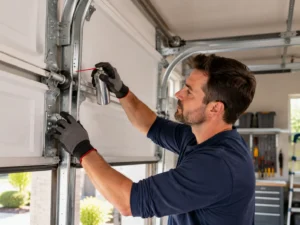
Standard lubricant can thicken and become less effective in freezing temperatures. A silicone-based, cold-rated lubricant on rollers, hinges, and springs keeps everything moving smoothly even on the coldest days.
Clear Tracks of Debris and Moisture
Leaves, dirt, and standing water in the tracks can freeze solid overnight, preventing the rollers from moving properly. A quick cleaning before the first freeze helps avoid this entirely.
Check the Auto-Reverse Safety Feature
Cold weather can affect sensor performance and mechanical response times. Testing the auto-reverse feature with a scrap piece of wood ensures it still responds correctly before you’re relying on it during a storm.
Inspect the Springs and Cables
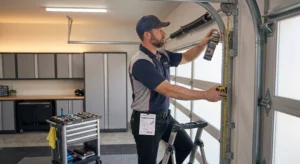
Cold temperatures make metal more brittle, and a spring or cable that’s already worn is more likely to fail during a cold snap. A quick visual check for rust, fraying, or gaps between spring coils can catch a problem early.
Test the Backup Battery
Winter storms often bring power outages. If your opener has battery backup, confirm it holds a charge so you can still operate the door manually or via backup power if the electricity goes out.
Check the Garage Door Panels for Existing Damage
A small dent or hairline crack that seemed harmless in the fall can worsen once the metal contracts in the cold, sometimes compromising the seal around that section of the door. Walking the full width of the door and checking each panel closely gives you a chance to address minor damage before a storm turns it into a bigger problem.
During the Storm: What to Watch For
- Ice Buildup Along the Bottom Seal: This can prevent the door from sealing fully or cause it to freeze to the ground overnight.
- Unusual Resistance When Opening: If the door feels heavier or slower than normal, stop and investigate rather than forcing it with the opener.
- Snow Load on the Roofline Above the Door: Heavy accumulation can add stress to the header and track area over time.
- Drafts Around the Door Frame: A sudden increase in cold air seeping in can signal that a seal has shifted or failed under storm conditions.
If your door is already struggling before winter even hits, it’s worth having it looked at now. The team at Titan Garage Doors’ service and repair division can handle everything from weatherstripping replacement to full seasonal tune-ups.
After the Storm Passes
Once conditions clear, it’s worth doing a quick follow-up check rather than assuming everything is fine simply because the door still opens. Clear away any built-up snow or ice around the base of the door, check that the weatherstripping is still properly seated, and cycle the door a few times to confirm it moves smoothly through its full range. Catching a problem right after a storm is almost always easier and less costly than discovering it partway through the next one.
Protecting the Opener and Electrical Components
It’s not just the door and hardware that need attention before winter. If your garage isn’t heated, extreme cold can affect the opener’s circuit board and wiring connections, particularly on older units. Check that wiring at the wall console and motor unit is secure and free of corrosion, and avoid running space heaters or other equipment too close to the opener, since condensation from temperature swings can be as damaging to electronics as the cold itself. If your opener has struggled in past winters, such as failing to respond or requiring frequent resets, it’s worth having it evaluated before the season starts rather than during a storm when a replacement part may take longer to source.
Building a Simple Seasonal Routine
Rather than treating winter prep as a single big task, many homeowners find it easier to build a short seasonal routine they repeat every fall. Set a reminder in early autumn to inspect weatherstripping and hardware while the weather is still mild enough to comfortably work outside. Doing this consistently, rather than only after a problem shows up, tends to catch small issues while they’re still inexpensive and easy to fix, and it means your door is already storm-ready by the time the first serious cold snap arrives.
Frequently Asked Questions
How do I keep my garage door from freezing shut?
Fresh weatherstripping, clean tracks, and keeping the bottom seal free of ice buildup are the most effective ways to prevent a door from freezing to the ground overnight.
Should I use a different lubricant in winter?
Yes, a silicone-based lubricant rated for cold weather performs better than standard lubricant, which can thicken and become less effective once temperatures drop significantly.
Can extreme cold damage my garage door springs?
Cold makes metal more brittle, so springs that are already worn are more likely to fail in freezing temperatures. This is why a pre-winter inspection is worth doing every year.
What should I do if my garage door won’t open during a storm?
Check for visible ice at the bottom seal first, then try the manual release if the opener seems unresponsive. If the door still won’t move, avoid forcing it and call for professional help.
Is it worth upgrading weatherstripping before every winter?
Weatherstripping typically lasts several years, but it’s worth inspecting annually. If it’s cracked, flattened, or no longer sealing tightly, replacing it before winter is a smart, low-cost upgrade.
Call Titan Garage Doors Today
Don’t wait for the first storm to find out your door isn’t ready. Contact us today for a pre-winter inspection and tune-up.